Defensive three seconds, the rule nobody sees called
A technical foul for standing still. Where the count starts, what resets it and why it exists at all.
- Section
- Explainers
- Desk
- Explainer
- Length
- 586 words, about 3 min
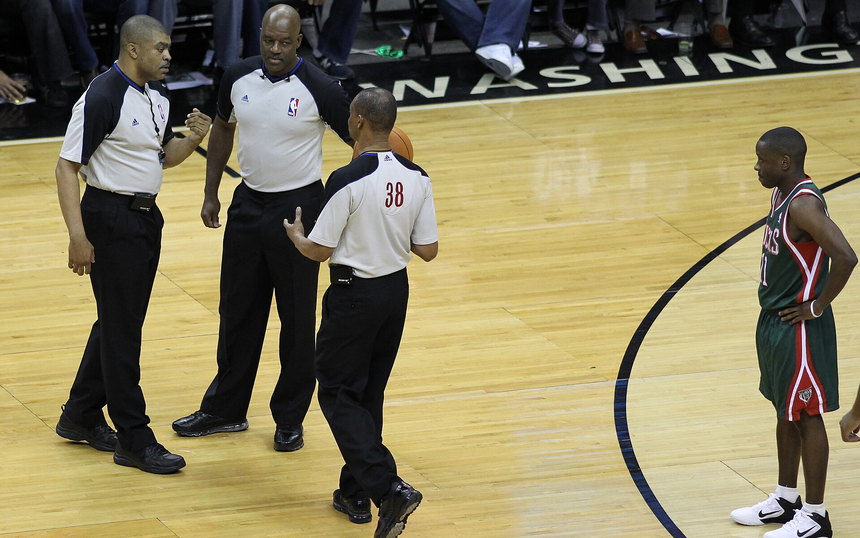
A whistle halts play across an NBA court, yet no shooter hit the floor and no guard reached in on a drive. The call is defensive three seconds. Under Rule No. 10 of the NBA rulebook, the violation occurs when an offensive squad secures control of the ball in the frontcourt and a defensive player occupies the paint without actively contesting an opponent. The penalty assesses a technical foul, awarding the offense one free throw alongside retained possession.
Lane Boundaries and the Active Guarding Requirement
Defenders cannot simply park beneath the rim to deter drives to the basket. Under league rules, any defensive player stationed within the 16-foot lane, or inside the area extending 4 feet past the lane endline, must actively guard an opponent within three seconds.
The NBA defines active guarding with precise physical parameters. A defender satisfies the requirement only by positioning within arm’s length of an offensive player while maintaining a legal guarding stance. Merely standing in the vicinity of the rim, shading toward a cutter, or tracking the ball from afar does not qualify. The count begins the instant the offensive team establishes live ball control in the frontcourt.
Specific Game States That Suspend the Count
The three-second restriction does not permanently banish rim protectors from the paint. NBA Official Rule No. 10 outlines several specific live-play conditions that immediately suspend the official's count:
- A player enters the act of shooting.
- There is an immediate loss of offensive team control.
- The defender actively guards an opponent within arm's length.
- The defender completely clears the 16-foot lane.
- It is imminent that the defender will become legal.
These suspension triggers allow interior players to rotate, contest, and recover during live offensive sets. According to demonstrations in the NBA Video Rulebook, an interior defender can step up to challenge a drive, pause the count during the primary threat, but face an immediate resumption of the timer if the ball handler passes to the perimeter. If that defender remains in the lane longer than three seconds without attaching to a new assignment or clearing the key, officials blow the whistle.
Technical Penalties and Paint Governance
A defensive three-second infraction carries an immediate cost under Rule No. 10 and Rule No. 6. Officials assess a technical foul against the defense, granting the opposing team a single free throw. Following the shot, the offensive team receives the ball back to resume its possession.
The NBA implemented this restriction before the 2001–2002 season. By introducing defensive three seconds in conjunction with the complete removal of previous illegal defense rules, the league permitted zone concepts while ensuring rim protectors could not camp permanently inside the lane.
Contrasting the NBA Rule with FIBA and NCAA Codes
Spectators often confuse the NBA’s defensive whistle with international and amateur standards. The distinction lies in which side of the ball faces the clock.
FIBA’s official 2026 rules dictate that an offensive player shall not remain in the opponents’ restricted area for more than 3 consecutive seconds while their team maintains control of a live ball in the frontcourt and the game clock runs. Rulebook summaries for NCAA and NFHS competitions address a similar standard, restricting the lane presence of players whose team holds frontcourt possession. Neither code enforces the NBA's defensive paint timer. The defensive three seconds rule NBA referees call remains a distinct mechanism designed specifically for the professional floor.