Goaltending and basket interference: where the line is
Two violations, one rim, and a boundary drawn by the cylinder above it.
- Section
- Explainers
- Desk
- Explainer
- Length
- 732 words, about 4 min
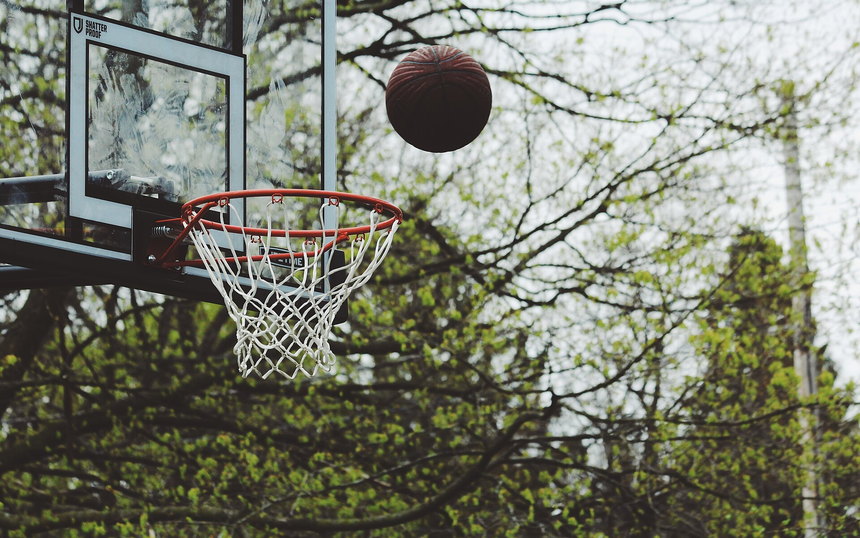
NBA Rule No. 11 divides illegal shot disruption into two distinct infractions: goaltending and basket interference. While fans often group them together because both can award points to the shooting team, officials separate them by the physical location of the ball and whether it has reached the basket ring.
Evaluating goaltending vs basket interference requires tracking whether the ball is still in open flight toward the hoop or occupying the space directly over the ring.
The Imaginary Cylinder and Ring Base Under NBA Rule 11
Basket interference applies the moment a shot reaches the rim or enters the airspace directly above it. NBA Rule No. 11 states that basket interference occurs when a player touches the ball or the basket ring while the ball is sitting or rolling on the ring, using the rim as its lower base. The rule also prohibits hanging on the rim while the ball passes through the net.
The core spatial restriction involves the imaginary cylinder, an invisible vertical column projected upward from the circular rim. Under the 2023–24 NBA Season Official Playing Rules, last updated in 2025, players cannot touch any ball from within the playing area when it is above the basket ring and within this imaginary cylinder.
NBA rule authority guidance clarifies that this restriction covers two specific contact states:
- Touching the ball once it contacts the rim and rests on the rim as its base.
- Touching the ball after it bounces off the rim if the ball remains within the imaginary cylinder above the ring.
Contact with the ball in either state immediately triggers a whistle for basket interference.
Downward Flight and Backboard Contact Triggers
Goaltending applies earlier in the sequence of a shot. The call covers defensive contact while the ball is on its downward path toward the rim before touching the metal ring.
The relationship between the backboard and downward flight is explicitly outlined across amateur and scholastic rule sets. In the NFHS 2025–26 basketball rules materials, a ball is considered to be on its downward flight once it contacts the backboard on a legitimate field goal attempt. If a defensive player touches the ball after that glass contact occurs, the action is ruled goaltending.
NFHS interpretations separate these flight-path violations from interference provisions. Basket interference addresses contact with the ball or basket while the ball is on or in the basket, touching the backboard while in the cylinder, or operating directly inside that vertical column. Technical foul provisions handle separate unsporting actions on the floor.
The Rim-Roll Exception and International Variations
The NBA provides a specific clearance exception on the edge of the rim. According to the NBA rule authority guidance, a player may legally touch the ball while it is still touching the rim if it is rolling off the outer edge. Making legal contact with the ball during this outward roll immediately ends the field goal attempt.
FIBA governs this boundary differently across its rule updates:
FIBA’s 2024 Official Basketball Rules say that goaltending restrictions apply until the ball has touched the ring. In the 2026 Official Basketball Rules, FIBA adjusted this boundary, establishing that goaltending restrictions apply until the ball no longer has the possibility to enter the basket.
FIBA’s official interpretations define interference to include touching the basket or backboard while the ball is in contact with the ring and still holds an active chance to enter the net. FIBA also classifies a defensive player touching the ball while it sits entirely within the basket as interference.
Scoring Treatment and Late-Game Counting in College Play
When defensive violations occur, scoring tables must record the result without crediting an actual defensive stop. The Official NCAA Basketball Statisticians' Manual specifies that a shot interrupted by defensive goaltending or defensive basket interference is recorded as if no violation occurred and the field goal attempt was successfully made.
Timing controls also track these calls through late-game situations. The NCAA men’s basketball table crew reference sheet for the 2025–26 season specifies that called basket interference or goaltending is counted through the final two minutes of regulation. Whether the infraction is goaltending during the downward arc or basket interference within the cylinder, the official's ruling depends on whether the ball has finished its trajectory or begun interacting directly with the rim.